
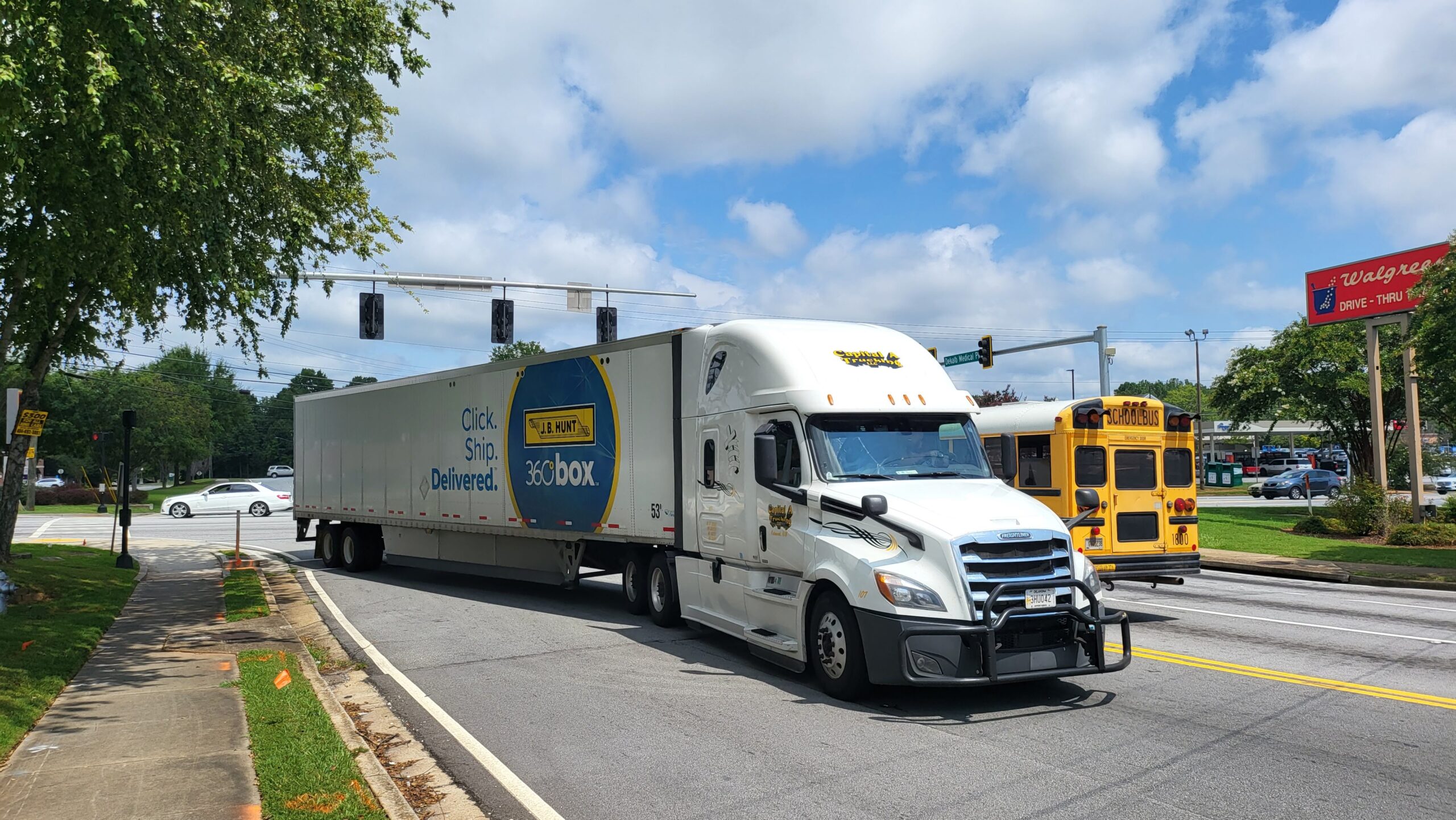
Keeping Goods Moving Through Rigorous Freight Economics and Supply Chain Intelligence
In an era of supply chain disruption, port congestion, and accelerating e-commerce growth, understanding how freight infrastructure decisions ripple through regional and national economies has never been more urgent. Jack Faucett Analytics provides the quantitative depth and policy expertise that agencies, port authorities, and planning bodies need to make defensible freight investment decisions—and to compete for the federal resources that make those investments possible.
Our Approach
We view freight not as a traffic engineering problem, but as an economic system where commodity flows, supply chain dependencies, and infrastructure capacity intersect with land use, environmental outcomes, and regional competitiveness. Our methodology goes beyond vehicle counts and level-of-service metrics, applying freight demand modeling, commodity flow analysis, and input-output economics to illuminate how freight infrastructure decisions create value—or impose costs—across the full economy.
Core Capabilities
Freight Demand Modeling & Commodity Flow Analysis: JFA develops and applies freight demand models that project how commodity flows will evolve under different investment and policy scenarios, providing the analytical foundation for freight plans, corridor studies, and intermodal connectivity assessments.
Economic Impact Analysis of Freight Infrastructure: From inland port feasibility studies to major gateway capacity assessments, JFA quantifies the direct, indirect, and induced economic effects of freight infrastructure investments—measuring impacts on employment, output, and regional competitiveness in formats suited to grant applications and public decision-making.
Truck Size & Weight Policy Analysis: JFA has conducted foundational research on the economic and infrastructure consequences of truck weight and size regulations—supporting federal agencies in evaluating the trade-offs between freight efficiency, pavement damage, and safety across the National Highway System.
Freight Plan Development & Federal Compliance: JFA helps state and regional agencies develop State Freight Plans and freight elements of long-range transportation plans that meet FAST Act requirements while reflecting the specific economic geography and supply chain dynamics of their regions.
Why Jack Faucett Analytics?
A Proven Track Record with FHWA and Regional Planners: JFA has supported FHWA, port authorities, state DOTs, and metropolitan planning organizations on freight analysis for decades—building the institutional knowledge and federal relationships that complex freight studies demand.
Rigorous Economics at the Core: Unlike firms that approach freight primarily as a traffic and engineering challenge, JFA brings economic analysis to the center of freight work—ensuring that investment decisions are grounded in a clear understanding of how goods movement creates economic value and how that value is distributed across the region.
Decision-Grade Analysis for High-Stakes Investments: Freight infrastructure investments are large, long-lived, and politically visible. JFA produces the rigorous, well-documented analysis that allows decision-makers to defend their investment priorities to oversight bodies, federal program offices, and the public.
“Freight is the circulatory system of the economy. Getting freight infrastructure decisions right requires understanding not just where trucks move, but how goods flows shape the economic life of the communities they pass through.”