
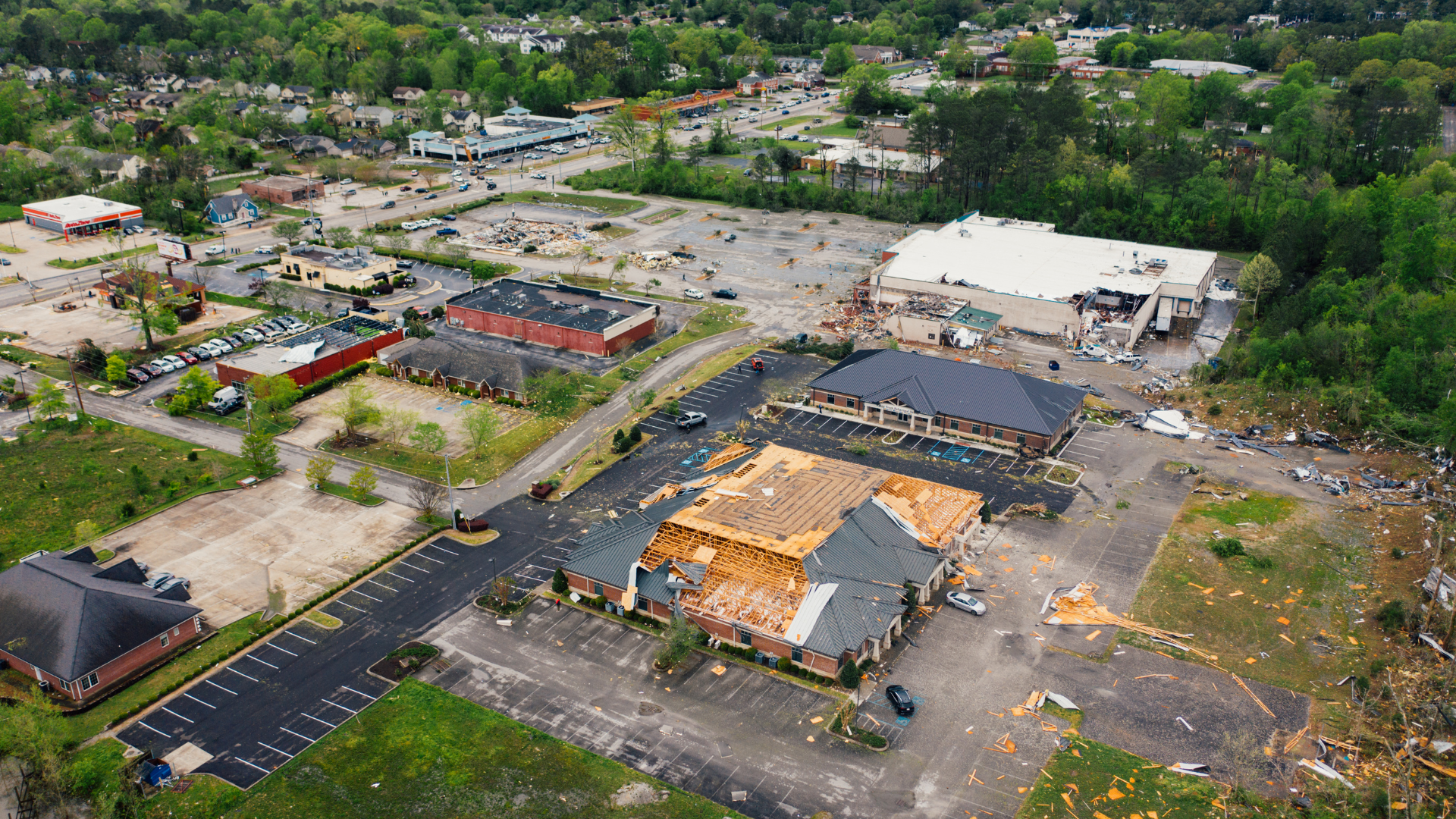
Quantifying Risk, Prioritizing Investments, and Building Systems That Endure
In an era of escalating climate impacts, aging infrastructure, and mounting fiscal constraints, the ability to make defensible, evidence-based decisions about where to invest in resilience has become a core competency for public agencies. Jack Faucett Analytics provides the analytical rigor and strategic depth needed to transform resilience planning from aspirational commitment to measurable, fundable action.
Our Approach
We treat resiliency not as a standalone planning exercise, but as an integrated dimension of sound infrastructure and economic analysis. Our methodology combines benefit-cost analysis, climate risk modeling, and infrastructure performance data to build a rigorous case for prioritized investments—helping decision-makers understand not just where vulnerabilities exist, but what it costs to leave them unaddressed and what returns targeted mitigation can deliver over time.
Core Capabilities
Resilience Benefit-Cost Analysis: JFA applies OMB-consistent benefit-cost frameworks to resilience investments, quantifying the long-term value of mitigation measures in terms of avoided damages, service continuity, and reduced recovery costs—producing the economic justification that federal grant programs and capital planning processes require.
Climate Risk & Vulnerability Assessment: We develop the quantitative risk profiles that underpin effective resilience planning—integrating climate projections, infrastructure exposure data, and consequence modeling to identify which assets and systems face the greatest long-term risk and to prioritize action accordingly.
Infrastructure Performance & Lifecycle Modeling: JFA evaluates how infrastructure systems perform under stress, modeling the cascading effects of disruption across transportation, energy, and environmental networks and identifying investments that provide the greatest system-wide benefit per dollar spent.
Federal Program Alignment & Grant Support: Resilience investments increasingly depend on federal funding. JFA helps agencies align their planning frameworks with FHWA, FEMA, HUD, and other program requirements—ensuring that resilience strategies are structured to compete successfully for available resources.
Why Jack Faucett Analytics?
Grounded in Economic Analysis, Not Just Engineering: Effective resilience planning requires more than identifying risks—it requires making the economic case for action. JFA’s benefit-cost expertise ensures that resilience investments are evaluated with the same rigor applied to any major public expenditure, producing findings that hold up to federal scrutiny.
Cross-Sector Depth Across Transportation, Energy, and Environment: Resilience challenges rarely respect sector boundaries. JFA’s experience spanning transportation, energy, and environmental analysis allows us to evaluate resilience investments in their full systemic context—capturing dependencies and co-benefits that sector-specific approaches miss.
Decision-Grade Tools for Complex Trade-Offs: Resilience planning requires agencies to make difficult choices under uncertainty. JFA develops the analytical frameworks, scenario models, and decision-support tools that allow planners to compare options clearly, communicate trade-offs honestly, and defend their investment priorities with confidence.
“Resilience is ultimately an economic question: what is the cost of vulnerability, and what is the return on reducing it? Answering that question rigorously is what separates plans that get funded from plans that sit on shelves.”
Key Staff
None listed.